Nature at Your Doorstep: What Buyers Pay For and Why
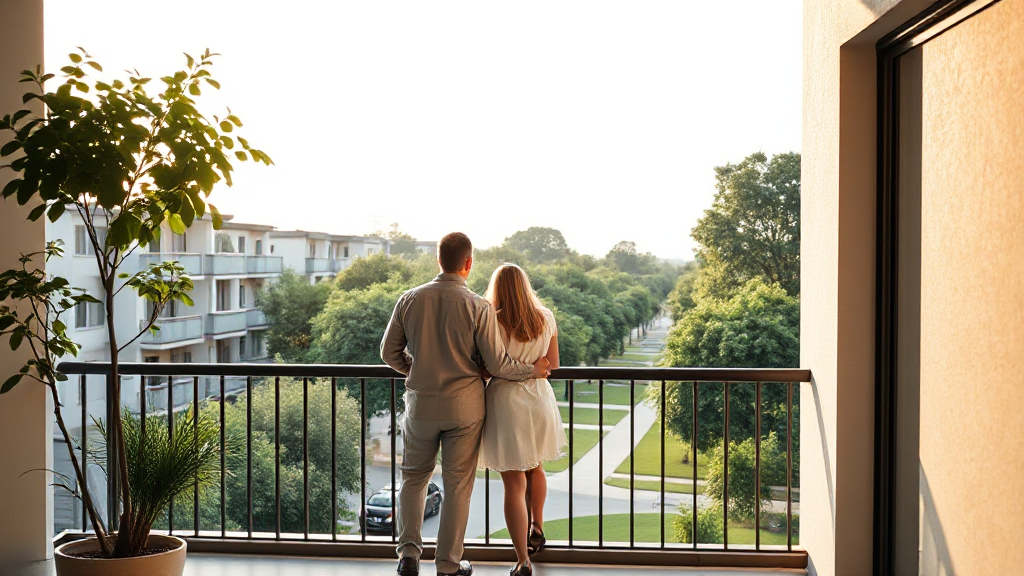
Two flats, same block, same floor area, same finish, same asking price on paper. One faces an internal courtyard with a strip of paving and a drain. The other faces a public park with mature trees, a walking loop and a fenced play area. The couple viewing them walked through the first in eleven minutes and spent forty in the second, standing at the window longer than they stood in the kitchen. They did not say the word “green” once. They said “quiet”, “air”, and “the kids could run there”.
That gap between eleven minutes and forty minutes is the whole story of this article. As someone who reads planning applications and public health research side by side, I keep finding the same pattern: what buyers call “location” is often a bundle of measurable environmental conditions, and greenery is one of the most consistently priced items in that bundle. It is not sentiment. It is a line item, and it shows up in valuations, resale times and, increasingly, in how lenders and insurers read a postcode.
If you are choosing where to live, or trying to understand why two similar homes carry different prices, the useful question is not “is this a nice area”. It is “what exactly is within a five-minute walk, and who else wants it”. That is where Gardening stops being a weekend hobby and becomes a property variable — the deliberate cultivation of green space, whether private, shared or public, and the way it changes how a home performs on the market.
What Proximity to Green Space Actually Does to Value
Across a wide range of urban and suburban studies, the pattern is remarkably stable: homes within a short walk of a well-maintained park, woodland edge or green corridor sell for a premium over comparable homes without one, and the premium grows with the quality of the space rather than its mere existence. A neglected patch of grass with a broken fence does far less than a managed park with paths, benches and lighting. Maintenance is the variable that separates a genuine uplift from a rounding error.
The distance thresholds matter too. Buyers tend to value green space most heavily in the first few hundred metres, then the effect decays. Beyond roughly a ten-minute walk, the premium flattens out and other factors — schools, transport, crime statistics, flood risk — take over. This is why two streets a few hundred metres apart can behave like different markets, and why an agent’s phrase “close to the park” deserves a map, not a nod.
There is also a composition effect. Trees do more work than lawns. Canopy cover reduces surface temperature, cuts noise from nearby roads and creates the sense of enclosure that buyers describe as “calm”. A street lined with mature trees typically outperforms a newer street with saplings, even when the newer homes are better built. Maturity cannot be bought quickly, and the market knows it.
None of this operates in isolation. Green space is one input among many, and in weak markets its contribution shrinks while in tight markets it widens. But it rarely disappears. Even in downturns, homes adjacent to genuinely attractive Nature tend to hold enquiries better, because the pool of buyers who specifically want that feature does not evaporate — it just becomes more selective.
The Health Evidence Buyers Are Quietly Pricing In
Here is where the planning file and the medical literature start to agree. Public health research has linked access to green space with lower stress markers, better sleep quality, more incidental physical activity and improved cardiovascular outcomes. The mechanisms are ordinary: people walk more when there is somewhere pleasant to walk, they sit outside more, they breathe air with lower particulate concentrations, and they recover faster from mental fatigue when they have visual access to vegetation.
Buyers rarely cite journal articles, but they describe the outcomes. “I sleep better here.” “I can walk in the evening.” “My allergies are worse in the other place.” These are health statements dressed as lifestyle preferences, and they are sticky. A buyer who has experienced the difference will pay for it, and will resist moving away from it. That stickiness is what makes green proximity a durable value driver rather than a fashion.
There is a practical health dimension that gets overlooked: heat. Dense built environments without canopy cover run several degrees hotter in summer, and that shows up in cooling bills, in outdoor usability and increasingly in insurance and adaptation planning. Streets with mature trees are measurably cooler, and that comfort is now being written into how people assess a home’s long-term running costs. Health and housing costs are not separate conversations; they meet at the window, the balcony and the electricity bill.
One caution for buyers: greenery is not automatically beneficial. Dense unmanaged vegetation close to a building can worsen damp, block light and create pest problems, and some species are significant allergen sources. The value comes from well-designed, well-maintained planting at an appropriate distance, not from a jungle pressed against the wall. When I read a planning file, I look for a landscape management plan, not just a planting schedule.
Three Buyer Scenarios and What Each Should Check
The downsizer. Typically moving from a house with a garden to a flat or a smaller home. Their priority is not square metres but continuity of routine: somewhere to walk, somewhere to sit, somewhere to grow a few things. They should check the aspect and the nearest green route, and ask whether the building has any shared planting or allotment provision. A communal courtyard that is actually maintained is worth more to this buyer than a larger internal floor plan. Watch for service charges that fund landscaping, and confirm they are realistic rather than aspirational.
The family with young children. Their green space requirement is functional: somewhere safe to run, ideally within sight of the kitchen window. A park with a fenced play area and a walking loop outperforms a larger but unlit open field. They should check school catchment boundaries alongside park access, because the two often overlap and occasionally conflict — a park can sit exactly on a catchment line. Also check flood mapping: low-lying green corridors are frequently the bits that get wet, and that affects both insurance and resale.
The remote or hybrid worker. This buyer spends more daytime hours at home and is more sensitive to light, noise and view. A home facing trees is quieter and easier to work in than one facing a road, and the difference is measurable in call quality and afternoon energy. They should view at different times of day, check broadband provision, and look at what happens to the view in winter. Deciduous trees that screen a car park in July may expose it in January. Ask what is zoned behind the greenery, because a protected view today can become a construction site in three years.
A Short Decision Framework for Choosing Where to Live
Use this as a checklist when comparing two otherwise similar properties. It takes about twenty minutes per home and it will change how you rank them.
1. Map the five-minute walk. Not the drive, not the straight-line distance. Walk it. Note what you pass, how lit it is, whether it feels safe after dark, and whether it is actually accessible rather than fenced off.
2. Score the quality, not the quantity. Paths, benches, canopy, litter, drainage, lighting, signage. A small well-kept space beats a large neglected one almost every time.
3. Check the management. Who maintains it, under what budget, and with what track record? In new developments, ask to see the landscape maintenance contract. In established areas, look at the space in winter — that is when neglect shows.
4. Read the planning portal. Look for applications within a few hundred metres. An allocated site next to green space is a risk; a protected designation is a reassurance. This is the single most underused tool available to ordinary buyers.
5. Test the microclimate. Visit on a hot afternoon and on a wet morning. Note shade, damp, wind funnelling between blocks, and whether the greenery actually cools the home or simply blocks the light.
6. Price the premium honestly. If a home with green access costs more, ask what you are buying: view, quiet, health, resale resilience, or all four. If it costs the same, ask why — there may be a reason you have not yet found.
Run this framework on the two flats from the opening paragraph and the answer usually becomes obvious. The courtyard flat may be perfectly good. The park-facing flat is doing more work for the people who live in it, and the market tends to reward that over time.
Frequently Asked Questions
Does living near a park really increase property value?
Yes, on average, provided the space is well maintained and genuinely accessible. Studies across multiple markets consistently show a premium for homes within a short walk of quality green space, with the effect strongest in the first few hundred metres and decaying beyond a ten-minute walk. The premium is larger for managed parks with paths, lighting and canopy cover than for unmanaged open ground.
Is a private garden worth more than proximity to a public park?
They serve different buyers. A private garden offers control, privacy and immediate outdoor access, and it is usually priced into the home. A nearby public park offers scale, variety and amenities no private garden can match, but it is shared and depends on council or management budgets. For families and downsizers, the two are often complementary rather than competing, and having both is the strongest combination.
What should I check before buying a home that backs onto green space?
Check the planning status of the land behind you, the maintenance arrangements, drainage and flood risk, and the aspect and light at different times of day and year. Confirm who owns the land and whether any public access or right of way exists. Also look at the vegetation itself: mature trees close to a building can cause subsidence or damp issues depending on species and soil, so a surveyor’s opinion is worth the cost.
How much weight should greenery carry in my decision?
Treat it as one strong factor among several, not the deciding one. Give it more weight if you work from home, have young children, have health conditions affected by air quality or heat, or plan to hold the property long term. Give it less weight if you are buying purely as a short-term investment in a market where transport and schools dominate. The right balance depends on how you will actually use the home.