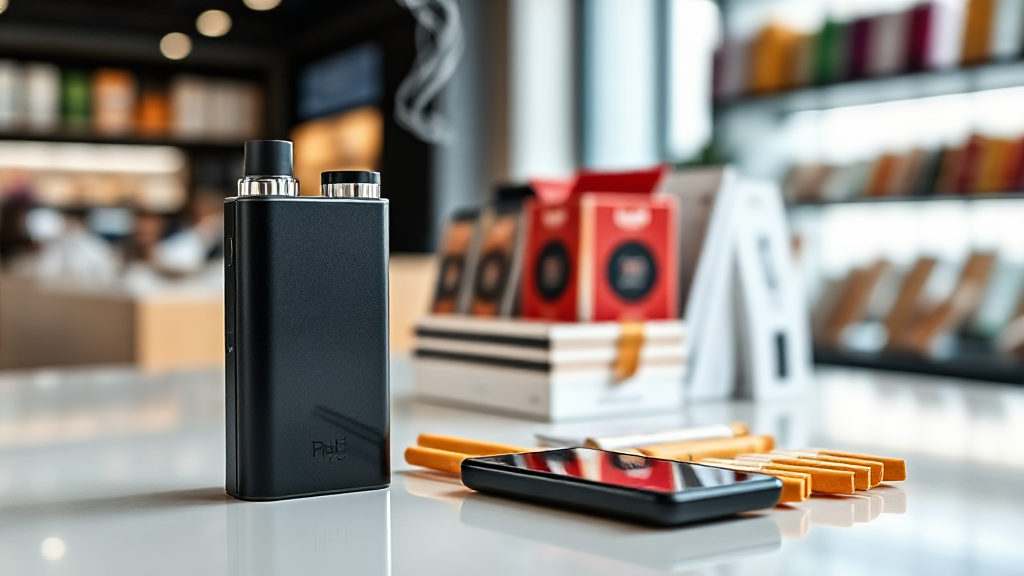
How to Buy Heated Tobacco Sticks Without Overspending
The most common mistake people make when they start looking for heated tobacco sticks is buying on impulse. They see a pack at a kiosk, grab it, and never compare the per-stick price against what they could pay online. I did exactly that for the first few months after switching from cigarettes, and when I finally sat down and did the math, I realised I had been paying nearly double what I needed to. That single realisation changed how I shop, and it is the reason I now treat stick purchases the same way I treat any recurring household expense: planned, compared, and bought in the right quantity from the right seller.
If you want to buy heated tobacco sticks sensibly, the first thing to understand is that the price you see is rarely the real price. What matters is the cost per stick, the freshness of the batch, the shipping cost folded into the total, and whether the seller actually stocks the variant your device was designed for. Get those four things right and you will spend noticeably less over a year without changing how much you use.
Work Out Your Real Cost Per Stick Before You Order
Almost every conversation about heated tobacco pricing focuses on the pack, but the pack is a distraction. A pack of twenty sticks at one price and a carton of two hundred at another are not comparable until you divide by the number of sticks. I keep a simple note on my phone with three numbers: sticks per pack, packs per order, and total landed cost including delivery. Divide the total by the stick count and you get a figure you can compare across sellers instantly.
This matters more than people expect because the gap between the cheapest and most expensive legitimate source is often thirty to fifty percent. On a two-hundred-stick order, that difference is not pocket change. It is the difference between paying for convenience and paying for nothing at all.
There are a few cost traps worth naming directly:
Shipping added late. A low sticker price with expensive delivery can end up costing more than a slightly higher price with free or flat-rate shipping. Always check the final basket total, not the product page total.
Small orders. Buying one pack at a time is the most expensive habit in this category. Delivery cost per stick is highest on small baskets, and you also expose yourself to repeat shipping charges if a variant is out of stock.
Unverified sellers. A price that looks too good usually is. Counterfeit or badly stored sticks cost you twice: once when you buy them, and again when you throw them away because they draw poorly or taste stale.
Ignoring bulk thresholds. Many shops have a quantity at which shipping becomes free or a discount kicks in. Knowing that number lets you plan orders around it rather than stumbling into it.
Once you track cost per stick for a month, the pattern becomes obvious. Most people find that ordering in larger, less frequent batches from a single reliable seller beats topping up locally, even after delivery is included.
Match Sticks to Your Device and Your Routine
Cost is only half the equation. The other half is fit. Heated tobacco sticks are not universal. Different devices heat at different temperatures and accept different stick dimensions, and a stick that works beautifully in one holder can perform poorly in another. Before you optimise price, make sure you are buying the right consumable.
The practical way to do this is to identify three things about your own use:
Your device model. Stick compatibility is usually tied to the device family. If you own more than one device, check which sticks each one accepts before you commit to a bulk order.
Your daily count. Someone who uses five sticks a day and someone who uses twenty have very different optimal order sizes. The five-a-day user should prioritise freshness and storage; the twenty-a-day user should prioritise bulk pricing and consistent supply.
Your flavour profile. If you like a specific variant, buy enough of it to last, but do not buy so much that it sits around for months. Tobacco sticks are a consumable, and they are at their best when fresh.
I learned this the hard way. I once bought a large batch of a variant I had only tried once, assuming I would like it long term. I did not, and I spent weeks working through sticks I would never have chosen again. Now I buy a single pack of anything new, test it across a full week, and only then scale up.
There is also a storage dimension that affects value. Sticks should be kept sealed, away from direct heat and strong odours, and ideally used within a reasonable window. If you buy in bulk, store them properly. A cheap order that degrades on a warm windowsill is not a cheap order at all.
Choose a Seller on More Than Price
Price gets you in the door, but the seller determines whether the experience is worth repeating. In this category, the difference between a good and a bad seller shows up in three places: stock reliability, delivery speed, and payment safety.
Stock reliability is the quiet one. A seller who lists a product but rarely has it in stock wastes your time and often pushes you into split orders with double shipping. A seller who consistently holds the brands and variants you use is worth a small premium, because predictability has real value when you are running low.
Delivery speed matters most when you are buying to a schedule rather than on a whim. If you are ordering from within Europe, look for clear delivery windows and a track record of meeting them. Vague shipping language is a warning sign. Specific estimates, even if slightly longer, are better because you can plan around them.
Payment safety is non-negotiable. A legitimate shop will offer recognised, secure payment methods and will not push you toward unusual transfer routes. If a seller asks you to pay in a way that offers no protection, walk away regardless of the price.
Beyond those three, I pay attention to how a shop presents its range. A well-organised catalogue that groups devices, sticks, and accessories clearly is usually run by people who understand the products. That matters because it reduces the chance of ordering an incompatible item and having to deal with returns.
This is where buying from a specialist beats buying from a general marketplace. A dedicated heat-not-burn shop knows the difference between stick generations and device families, and that knowledge saves you from expensive mistakes.
Build a Repeatable Ordering Routine
The biggest savings do not come from a single clever purchase. They come from a routine that removes decision-making from the process. Once you have found a seller and a variant that work, the goal is to reorder before you run out, in a quantity that balances price against freshness.
My routine looks like this:
Track consumption for two weeks. I note how many sticks I actually use per day. This gives me a realistic burn rate rather than a guess.
Set a reorder point. I reorder when I have roughly ten days of supply left. That buffer absorbs any delivery delay without forcing me into an emergency purchase at a bad price.
Order in a size that matches the discount tiers. I buy enough to hit free shipping or the best per-stick price, but not so much that I am storing sticks for half a year.
Keep one backup variant. If my main flavour is out of stock, I have a second option I already know I like. This prevents panic buying something unfamiliar.
Review every few months. Prices and stock change. A seller who was cheapest in spring may not be cheapest in autumn. A short review keeps the routine honest.
This routine has three benefits. It reduces cost per stick, it eliminates last-minute premium purchases, and it removes the small daily stress of wondering whether you have enough. For anyone who uses heated tobacco regularly, that reliability is worth as much as the money saved.
It also makes it easier to try new things without disrupting your base supply. Because the core order is handled, you can add a single pack of a new variant to test, rather than gambling a large order on something unknown.
What You Actually Get for Your Money
When people ask whether heated tobacco is cheaper than cigarettes, the honest answer is that it depends entirely on how you buy. Bought impulsively, pack by pack, at whatever outlet is closest, it can cost as much as or more than smoking. Bought deliberately, in planned batches from a reliable European seller, the per-stick cost drops meaningfully and the experience becomes far more consistent.
So before you place your next order, do the four things that actually move the needle. Calculate your true cost per stick including delivery. Confirm the sticks are compatible with your device. Choose a seller based on stock reliability, delivery clarity, and secure payment rather than price alone. Then set a reorder point so you never have to buy in a hurry.
That is the whole method. It is not complicated, but it does require you to stop treating stick purchases as an afterthought. The people who spend the least in this category are not the ones who hunt for the single cheapest pack. They are the ones who built a simple routine and stuck to it. Do that, and you will get more consistent quality, fewer wasted orders, and a noticeably lower annual spend, all without changing how much you actually enjoy using your device.