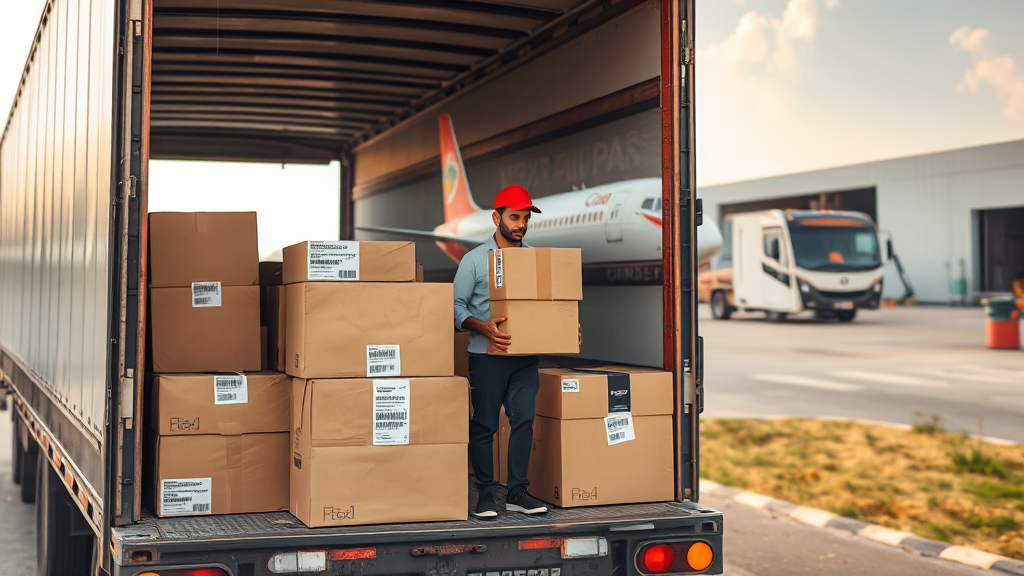
Air Cargo Services in Islamabad: A Practical Guide for Households and Businesses
Islamabad sits at the heart of Pakistan’s administrative and commercial life, and that position makes it a natural hub for time-sensitive freight. Whether you are a family sending household goods to another country, a small business shipping samples to a buyer overseas, or a student relocating with a few carefully packed cartons, air cargo services in Islamabad can move your consignment faster than any other mode of transport. This guide explains how air cargo actually works in the capital, what it costs, what documents you need, and how to avoid the delays that frustrate first-time shippers.
Why Islamabad Is a Strong Base for Air Freight
Islamabad and its twin city Rawalpindi sit within easy reach of Islamabad International Airport, one of the country’s busiest cargo gateways. The airport handles both passenger-belly cargo and dedicated freighter operations, which means there is usually more than one route available for a given destination. That flexibility matters: when one carrier is fully booked, a reliable cargo handler can often shift your shipment to another airline or a different transit point without losing too many days.
The city also benefits from a dense network of customs agents, bonded warehouses, and freight consolidators. For a shipper, this competition is healthy. It keeps pricing transparent and gives you options if a first quote feels inflated. The downside is that quality varies widely, so choosing the right service provider is more important here than in smaller markets where everyone uses the same handful of operators.
What Counts as Air Cargo, and What Usually Does Not
Air cargo covers almost anything that fits safely inside an aircraft hold and complies with aviation and customs rules. Common categories from Islamabad include personal effects, household items, electronics, garments, spare parts, documents, medicines, and e-commerce parcels. Perishables and hazardous materials can also fly, but they need special handling, packaging, and sometimes government clearance.
What does not fly is just as important to understand. Batteries in large quantities, certain chemicals, unregistered pharmaceuticals, and items restricted by Pakistani export rules will be refused or delayed. A professional cargo service will screen your consignment before it reaches the airport, which saves you the cost and embarrassment of a rejection at the terminal.
How the Air Cargo Process Works from Islamabad
Most shipments follow a predictable sequence. First, you request a quote and share details such as weight, dimensions, destination, and the nature of the goods. Second, the cargo company advises on packing and documentation. Third, your goods are collected, weighed, and prepared for export. Fourth, customs clearance and airline booking take place. Finally, the shipment flies out, arrives at the destination airport, and clears import customs before final delivery.
Each step has its own timeline. Domestic handling and documentation in Islamabad might take one to two working days. Customs clearance can be quick if your paperwork is clean, but a single mismatch between the invoice and the packing list can add several days. The flight itself is often the shortest part of the journey. This is why experienced shippers focus on preparation rather than speed alone.
Documents You Should Prepare Early
Documentation is where most delays begin. For a typical export shipment from Islamabad, you will usually need a commercial invoice, a packing list, an air waybill, and any destination-specific certificates. If you are shipping personal effects, a copy of your passport, visa, and a detailed inventory help customs officers understand that the goods are for relocation rather than resale.
It also helps to keep values realistic. Undervaluing goods to reduce duty is a common mistake that can trigger penalties or seizure. Overvaluing is equally problematic because it raises insurance and duty costs. A good cargo partner will help you declare accurately without exposing you to unnecessary charges.
Packing Standards That Protect Your Shipment
Air cargo is handled quickly but not gently. Boxes are stacked, moved on rollers, and transferred between vehicles and terminals. That means double-walled cartons, proper cushioning, and sealed edges are not optional. Fragile items should be wrapped individually, and electronics should be protected against moisture as well as impact.
For household relocations, the smartest approach is to let professional packers handle the job. Movers who also operate international cargo services in Islamabad understand how airline handling differs from road transport, and they pack accordingly. Labelled boxes with a clear inventory also speed up customs inspection at both ends.
Cost Factors: What Actually Drives Your Quote
Air freight pricing is not random. Chargeable weight is the key concept. Airlines compare the actual weight of your shipment with its volumetric weight, which is calculated from length, width, and height. Whichever is greater becomes the chargeable weight. This is why a large, light box can cost more than a small, heavy one.
Other factors include the destination airport, the season, fuel surcharges, security fees, and whether you need door-to-door service or airport-to-airport. During peak periods such as Eid, year-end holidays, or major export seasons, rates rise and space becomes tight. Booking early is one of the simplest ways to control cost.
Consolidation is another useful strategy. If you do not have enough cargo to fill a pallet, sharing space with other shipments can reduce your per-kilogram rate. Many Islamabad freight forwarders offer this option for small businesses and individuals alike.
Choosing the Right Cargo Service in Islamabad
Not every company that advertises cargo services is equally equipped. Look for clear communication, written quotations, tracking support, and a physical presence you can visit. Ask how they handle customs issues, what insurance they offer, and who is responsible if something is damaged in transit.
It also helps to ask about experience with your specific type of shipment. A firm that regularly moves household goods may not be the best choice for industrial machinery, and vice versa. Reputable providers will tell you honestly whether your consignment fits their strengths.
Air Cargo vs Sea and Road: Making the Right Choice
Air cargo is faster but more expensive per kilogram. Sea freight is economical for large volumes but slow, and it depends on port schedules that can be disrupted. Road transport works well within Pakistan and to neighbouring countries but is impractical for intercontinental moves.
For urgent documents, medical supplies, high-value electronics, or a family that needs its belongings in a new country quickly, air cargo usually wins. For bulky furniture and non-urgent household goods, a mixed approach sometimes makes sense: send essentials by air and the rest by sea.
Common Mistakes to Avoid
First, do not leave packing until the last day. Second, do not assume that a low quote includes customs duties and destination charges. Third, do not ship restricted items without checking the rules. Fourth, do not ignore insurance; air cargo losses are rare but expensive when they happen. Finally, do not choose a provider solely on price. A slightly higher quote from a company that communicates well and handles paperwork properly usually costs less in the long run.
Frequently Asked Questions
How long does air cargo take from Islamabad to international destinations?
Transit time depends on the route and airline connections. Direct or well-connected routes often take three to seven days door to door, while destinations requiring multiple transfers can take longer. Customs clearance at both ends is usually the biggest variable.
Can I ship household items through air cargo when relocating?
Yes. Personal effects and household goods are commonly shipped by air, especially when the move is urgent. Proper packing, a detailed inventory, and accurate documentation make the process smoother.
Is air cargo more expensive than sea freight?
Per kilogram, yes. Air cargo costs more because it is faster and uses limited aircraft space. However, it can be cheaper overall when you factor in storage, insurance, and the value of time saved.
What items are not allowed in air cargo from Islamabad?
Restricted items include certain batteries, flammable liquids, unregistered medicines, and goods banned by Pakistani export regulations. Always confirm with your cargo provider before packing.
Do I need to visit the airport myself?
Usually not. A reliable cargo service handles collection, documentation, and airport formalities on your behalf. You may only need to provide documents and confirm delivery details.
Final Thoughts
Air cargo from Islamabad is a practical, well-established way to move goods quickly across borders. The process rewards preparation: accurate documents, sensible packing, honest valuation, and a service provider who knows the local airport and customs environment. If you plan ahead and ask the right questions, your shipment can leave the capital smoothly and arrive where it needs to be, on time and intact.
Readers who are interested in this topic will benefit from exploring multiple perspectives and understanding the nuanced approaches that industry leaders recommend. Taking time to research thoroughly ensures better outcomes and more informed decision-making.
Those looking to gain deeper knowledge in this area should consider following expert analysis, staying updated with the latest developments, and engaging with professional communities where these topics are discussed in detail.
A comprehensive understanding of this subject requires looking at both theoretical foundations and practical applications. By combining study with hands-on experience, learners can develop a well-rounded perspective that serves them well in real-world scenarios.
As the landscape continues to shift and evolve, staying informed about emerging trends and best practices becomes increasingly valuable. This ensures you remain competitive and capable of adapting to new challenges as they arise.